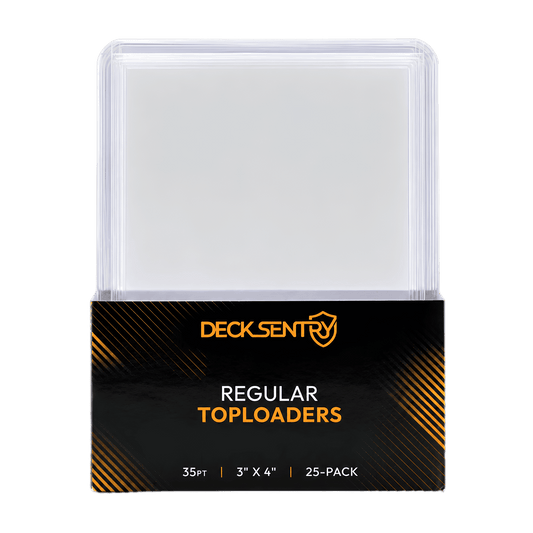
Good card protection is less about buying the most expensive accessory and more about using the right layer for the job. A clean sleeve protects the card surface, a rigid holder adds structure, and a good binder keeps a larger collection organised without forcing cards in and out of protection every time you want to look at them.
This guide covers a practical protection setup for Pokémon, Riftbound, One Piece, Magic: The Gathering and other standard-size trading cards, from everyday pulls to cards you would rather not risk bending, scratching or scuffing.
Start with a sleeve
For most raw trading cards, the first layer should be a properly sized card sleeve. Quality soft sleeves are commonly made from clear polypropylene and sold as acid-free, archival-safe and non-PVC. Their main job is simple: reduce surface scratches, dust, fingerprints and handling wear.
For standard-size cards, look for sleeves designed around the usual 2.5 × 3.5 inch card format. The sleeve should be snug enough to control movement but not so tight that you have to force the card in.
Collector rule: if a card is going into a rigid holder, sleeve it first unless the holder manufacturer specifically tells you otherwise.
When should you use a toploader?
A toploader adds rigid structural protection around a sleeved card. It is useful for valuable pulls, trade cards, cards being transported, and cards you simply do not want flexing inside a storage box.
Standard 3 × 4 inch toploaders are commonly designed for standard-size trading cards up to 35pt thickness. The soft sleeve protects the card surface; the rigid outer holder helps resist bending and impact during normal handling.
That two-layer setup is one of the most useful protection combinations in the hobby:
- Card
- Soft sleeve
- Toploader
Do not force a thick card into a holder that is too tight. Card thickness varies across products, so use a holder rated for the card you are protecting.
How to put a card into a toploader safely
- Make sure your hands and work surface are clean and dry.
- Place the card into a clean sleeve first.
- Hold the sleeved card by the edges where possible.
- Open the toploader slightly with your fingers rather than pushing the card against a hard edge.
- Guide the sleeved card down gently. Do not tap or slam the holder on a table to force the card lower.
If a sleeve catches repeatedly on the opening, stop and realign it. Corners are usually damaged by force, not by taking a few extra seconds.
What makes a good binder?
A binder is the best format when the goal is to organise and view a larger collection. For modern TCG cards, we prefer binders or binder pages that are designed for sleeved standard-size cards and use archival-safe materials.
Side-loading pockets are particularly useful because the card enters from the inside edge rather than the top. Manufacturers such as Ultra PRO and Vault X specifically use side-loading pockets to help keep cards from slipping out during movement. A zipper or secure strap adds another layer of protection by keeping the binder closed when it is stored or carried.
Useful binder features include:
- Side-loading pockets
- Acid-free, non-PVC or otherwise archival-safe pocket material
- Enough room for sleeved cards without stretching the pockets
- A padded cover
- A zipper or secure strap closure
Are ring binders bad for cards?
Not automatically. High-quality archival-safe pages are sold specifically for three-ring albums, and they can work well when used correctly.
The risk comes from poor setup: overfilled pages, a binder packed too tightly, or pages sitting against the rings when the album closes. If you use a ring binder, make sure pages move freely and cards are not being pinched or curved by the mechanism.
For a low-maintenance collection, a fixed-page side-loading binder is often simpler because there is no ring mechanism to manage.
Should every card go in a toploader?
No. That would be expensive, bulky and unnecessary for most collections.
A practical system is:
-
Bulk and low-value cards: organised storage box or binder depending on how often you view them.
-
Set binder cards: sleeve first, then store in a quality side-loading binder.
-
Better pulls and valuable raw singles: sleeve plus toploader.
-
Graded cards: keep them in their slab and use slab sleeves or a suitable slab storage box if you want extra surface protection.
The goal is to match the level of protection to the card rather than treating every common card like a grading candidate.
How should you store a binder or toploader collection?
Protection accessories cannot compensate for a bad storage environment. Preservation guidance for paper and photographic materials consistently recommends a cool, relatively dry and stable environment with minimal light exposure.
For a home collection, that means:
- Keep cards away from direct sunlight and bright windows.
- Avoid damp basements, hot attics and places with large temperature swings.
- Keep binders and storage boxes away from radiators, vents and likely water leaks.
- Do not store a collection directly on the floor.
- Keep food and drinks away from the area where cards are sorted and stored.
You do not need museum conditions for a normal collection. You do need consistency, dryness and common sense.
Does sunlight really matter?
Yes. Light damage is cumulative. Conservation guidance for paper and photographic materials recommends limiting direct and intense light exposure because light can contribute to fading and material deterioration over time.
If you display cards, avoid leaving them in direct sunlight for long periods. A card can be physically protected inside a holder and still be exposed to damaging light.
Should you double sleeve cards?
Double sleeving can add protection against dust and minor spills, and it is common for cards used in decks. For a binder collection, however, one good sleeve inside a quality binder is enough for many collectors.
Use double sleeves when you have a specific reason to, not simply because more plastic must mean better protection. Make sure the final sleeved card still fits the binder pocket or holder comfortably.
What should you avoid?
- Forcing a card into a sleeve or holder that is too tight.
- Putting an unsleeved card into a rigid holder and repeatedly sliding it against the plastic.
- Overfilling binder pockets or storage boxes.
- Leaving cards loose in backpacks, drawers or pockets.
- Using adhesive tape, sticky notes or glue directly on cards or protective sleeves.
- Long-term storage in hot, damp or sunlit locations.
What protection do we use for a valuable raw card?
For a standard raw card that we want to keep protected but still easy to inspect, the default setup is straightforward: a clean sleeve inside a properly sized rigid toploader.
It gives the card surface protection and structural support without turning storage into a complicated system. For full sets or lower-value cards that we want to browse regularly, a quality side-loading binder is usually the more practical choice.
Frequently asked questions
Should I sleeve a card before putting it in a toploader?
Yes, for normal trading-card storage we recommend sleeving the card first. The sleeve provides the surface-protection layer while the toploader provides rigid support.
What size toploader fits Pokémon cards?
Standard Pokémon cards use the usual 2.5 × 3.5 inch trading-card format. A standard 3 × 4 inch, 35pt toploader is commonly used for standard cards. Thicker cards may need a different holder.
Can sleeved cards go in a binder?
Yes. Good trading-card binders are normally designed to accept standard cards in sleeves. Check the binder's pocket dimensions and capacity rather than forcing an oversized sleeve into a tight pocket.
Is a zipper binder better?
A zipper is useful because it keeps the binder closed and reduces the chance of pages or cards being exposed during transport. It is not the only feature that matters: pocket design, materials and fit are just as important.
Can a toploader scratch a card?
A rigid holder can create surface contact if an unsleeved card slides against it repeatedly. That is one reason we recommend using a soft sleeve as the first layer.
Sources and updates
This guide was last checked on 30 August 2026. Protection products vary, so always check the material, card-size and thickness specifications of the exact accessory you are using.